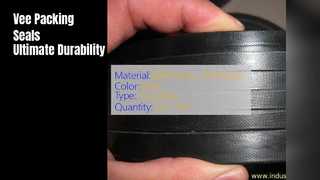
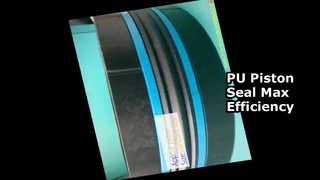
Brief: This video demonstrates the setup, operation, and key moments during typical use of Chevron, V, and Vee Packings made with NBR, FKM, and PTFE materials. You will see how these industrial seals function in pumps, valves, and hydraulic cylinders, showcasing their performance under low to high pressure and in extreme conditions.
Related Product Features:
Vee Packings are designed for sealing rods, pistons, and plungers in hydraulic cylinders and presses.
Constructed from durable materials including NBR+fabric, FKM+fabric, and PTFE+fabric for varied applications.
Suitable for both low and high-pressure applications in single or double-acting cylinders.
Ideal for use in oilfield downhole equipment such as various valves.
Operates effectively in extreme conditions and can accommodate misalignment between sealing gaps.
Features a working temperature range from -40℃ to 10℃ for reliable performance.
Exhibits low wear and tear with a rate of less than 0.05cm³/1.61km.
Available in standard specifications or customized to meet buyer requirements.
FAQs:
What are the primary applications of Vee Packings?
Vee Packings are primarily used in pumps, valves, hydraulic cylinders, and hydraulic presses to seal fluids or gases. They are also employed in oilfield downhole equipment like various valves, making them suitable for medium to heavy-duty applications.
Which materials are used in the construction of these Vee Packings?
These Vee Packings are made from high-quality materials including NBR (Nitrile) with fabric, FKM (Fluoroelastomer) with fabric, and PTFE (Polytetrafluoroethylene) with fabric, offering durability and resistance in diverse operating environments.
What temperature range and pressure conditions can these seals withstand?
The Vee Packings operate effectively within a temperature range of -40℃ to 10℃ and are designed for both low and high-pressure applications. They perform reliably in extreme conditions and can handle misalignment between sealing gaps.