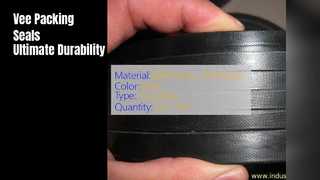
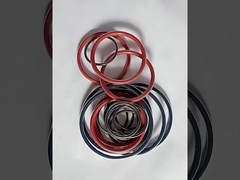
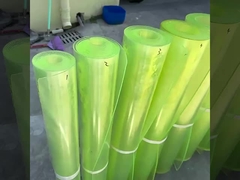
Brief: Watch this overview to discover why many professionals pay attention to this approach. In this video, we demonstrate the high-performance KDAS and DAS polyurethane piston seals for machine tools, showcasing their superior air sealing capabilities in demanding industrial environments. You'll see how these critical components function on piston heads and explore their applications across various global markets.
Related Product Features:
Provides superior air sealing performance for demanding industrial environments.
Made from 90 shore A hardness TPU material for exceptional mechanical strength and wear resistance.
Functions to contain pressure on one piston side without leakage for maximum piston movement efficiency.
Available in single-acting or double-acting configurations with back-to-back mounting capability.
Offers excellent flexibility with superior aging and ozone resistance for long service life.
Suitable for mobile hydraulics, injection molding machines, and standard cylinder equipment.
Features high pressure load capacity, tear resistance, and elongation at break properties.
Exported to global markets including Taiwan, Europe, America, Asia, Africa, and Middle East.
FAQs:
What is a piston seal and how does it function?
A piston seal, also called a piston packing, is mounted on piston heads that move through hydraulic or pneumatic cylinder tubes. It functions to contain pressure on one piston side without leakage, maximizing piston movement efficiency in industrial applications.
What are the key material properties of these polyurethane piston seals?
These seals are made from 90 shore A hardness TPU material that offers exceptional mechanical strength, abrasion and wear resistance, extrusion resistance, high pressure load capacity, tear resistance, and excellent elongation at break. The material also provides superior aging and ozone resistance.
In which industrial applications are KDAS/DAS polyurethane piston seals commonly used?
These high-performance piston seals are widely used in mobile hydraulics, injection molding machines, machine tools, piston accumulators, and standard cylinder equipment design across various industrial sectors globally.
What are the differences between single-acting and double-acting piston seal configurations?
Single-acting seals handle pressure from one side only, while double-acting seals can handle pressure from both sides. The KDAS/DAS seals support back-to-back mounting for double-acting arrangements, providing flexibility for different industrial requirements.