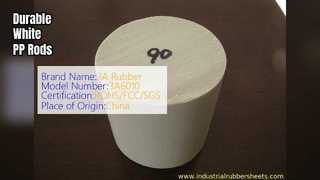
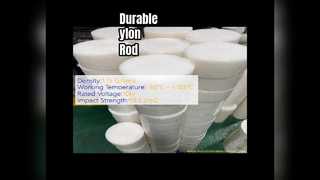
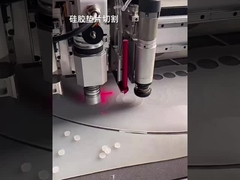
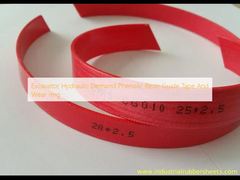
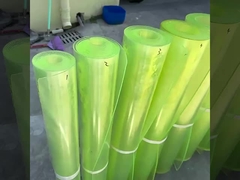
Brief: Curious about how this performs in practice? Join us for a hands-on look at the Good Insulation Cotton/Paper Phenolic Rod. This video provides a detailed walkthrough of its manufacturing process, key physical properties, and real-world applications in electrical insulation and machinery components. See how this high-pressure thermosetting laminated plastic is engineered for durability and reliability.
Related Product Features:
Made from 100% virgin silicone material, available in industrial and food grades.
Offers a smooth surface finish and comes in various colors like translucent, dark red, black, milk white, blue, and grey.
Features excellent tensile strength ranging from 7 to 9.8 Mpa for robust performance.
Available in multiple hardness options: 30, 40, 50, 60, 70, 80 +/-5 Shore A.
Provides high elongation of 350-700% and a density of 1.25 g/cm³.
Exhibits strong tear resistance between 26-42 N/mm.
Operates effectively across a wide working temperature range from -60°C to +250°C.
Custom sizes are available, with molds built according to buyer's drawings.
Faqs:
What are the primary applications of the Good Insulation Phenolic Rod?
It is widely used for insulating spare parts in electrical appliances, transformers, textile machinery, gears, bearing frames, and low-noise machines due to its excellent electrical insulation and mechanical properties.
What materials are used in the production of this phenolic rod?
The rod is manufactured using layers of cellulose paper, cotton fabrics, synthetic yarn fabrics, glass fabrics, or unwoven fabrics impregnated with synthetic resin, which undergo heat and pressure to form a high-pressure thermosetting laminated plastic.
How can I place an order for a custom-sized phenolic rod?
When placing an enquiry, please confirm the required color, hardness, quantity, and provide a detailed drawing so that we can build the mold according to your specifications.
What is the temperature range this phenolic rod can withstand?
This phenolic rod is designed to operate effectively in a wide temperature range from -60°C to +250°C, making it suitable for various industrial environments.