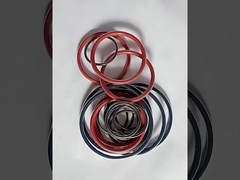
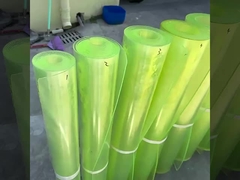
Brief: In this video, we explore the HRC Polyurethane Coupling, showcasing its economic design and excellent buffering capabilities for torque transmission. You'll see how its high-quality cast iron body and NBR rubber material ensure reliable performance in temperatures from -20°C to +100°C. We'll demonstrate its easy installation, maintenance-free operation, and ability to accommodate various misalignments, making it a versatile solution for demanding industrial applications.
Related Product Features:
Constructed with a high-quality cast iron body and NBR rubber material for durability.
Features excellent buffering capability to reduce peak moment loads and absorb shock.
Maintenance-free design requires no lubricant and offers long service life.
Accommodates parallel, angle, and axis shift misalignments for reliable transmission.
Economic design optimized to match transmission power with shaft diameter.
Includes a standard push-pull type taper sleeve for easy installation and dismantling.
Operates effectively in a wide temperature range from -20°C to +100°C.
Available in multiple standard sizes including HRC70 to HRC280 and OEM services.
FAQs:
What are the key advantages of the HRC Polyurethane Coupling?
The HRC Polyurethane Coupling offers maintenance-free operation, excellent environmental adaptability, reliable transmission even if the elastic component is damaged, an economic design optimized for power transmission, effective shock absorption, high misalignment tolerance, and includes a standard taper sleeve.
What temperature range can the HRC Coupling operate within?
The HRC Polyurethane Coupling is designed to operate effectively in working temperatures ranging from -20°C to +100°C, making it suitable for various industrial conditions.
Is the HRC Coupling available in custom sizes?
Yes, in addition to the extensive range of standard sizes like HRC70-HRC280 and various GR/MT/L series, special sizes are available according to buyer's drawings through OEM services.